- Up to 30% of harvested grain can be lost due to inadequate storage
- A new study showed that post-harvest losses can be dramatically reduced through hermetic storage
- This simple technology can have an outsized impact on farmer incomes and food security
By Glenn Concepcion
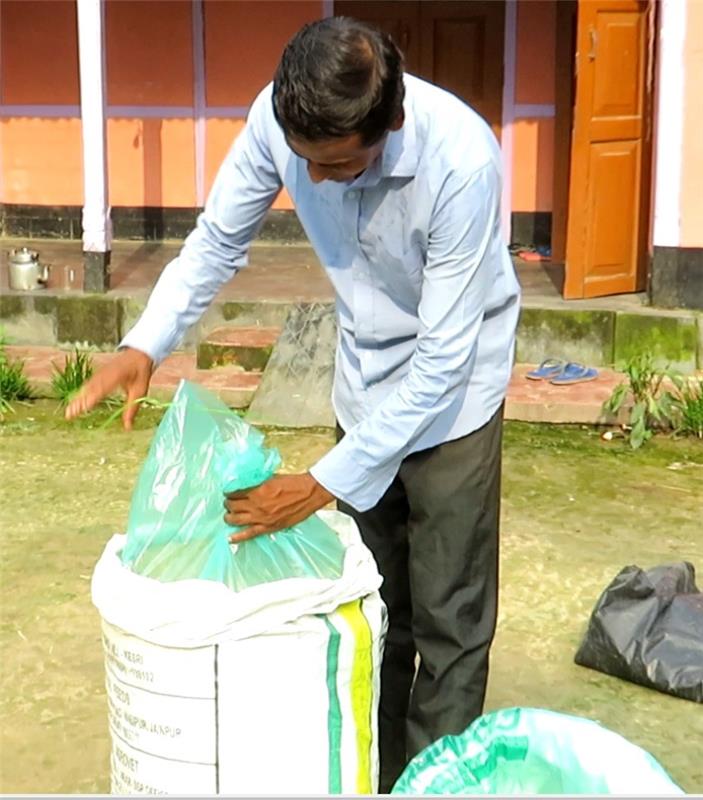
In the global struggle to enhance rice production and secure food and nutrition security, a key battle happens not in the paddy fields, but in the granaries and warehouses of developing Asian nations.
Experts estimate that post-harvest losses in rice range from 10-30% across the entire value chain, primarily due to improper drying, pest infestations, and inadequate storage conditions. Paddy rice is hygroscopic, meaning it naturally absorbs moisture from the surrounding air. Traditional storage structures and materials used by smallholder farmers, such as bamboo morai or jute gunny bags, allow seeds to re-absorb moisture, leading to mold growth, fungal infections, and rapid pest proliferation.
An experiment by researchers from the International Rice Research Institute (IRRI) in Assam, India, where the tropical monsoon climate pushes average relative humidity above 82% for much of the year, has revealed an extraordinary finding: hermetic storage technology is a simple, practical, and effective solution that can prevent millions of dollars worth in post-harvest losses.
The science of hermetic storage
Studies have shown that dried grains stored in traditional gunny bags often experience a steady increase in moisture content, rising from 14.8% to 16.3% over just five months. This “wetting” cycle is a death sentence for seed quality, as it causes biochemical reactions like oxidation that discolor grains and degrade seed viability.
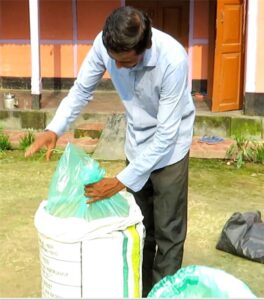
Hermetic storage offers a practical defense against this environmental threat. The study focused on the Super Grain Bag (SGB), a 60μ thick polyethylene liner coated with a high-tech gas barrier, operating on a simple principle: the ability to be sealable and airtight.
When the SGB is sealed, it restricts the exchange of gases and water vapor with the external atmosphere. As insects and the grains respire, they naturally deplete the oxygen inside the bag and increase carbon dioxide levels. In this low-oxygen environment, insect development is halted, and pests are effectively “suffocated” to death. Furthermore, the SGB’s low permeability—transmitting less than 5 g/m²/day of water vapor—ensures that grain moisture remains stable regardless of how humid the weather becomes.
The data speaks for itself
The experiment, conducted over two years in the Sivasagar and Jorhat districts of Assam, put this technology to the test against traditional methods. The results were definitive. The live insect populations in traditional gunny bags climbed steadily over five months, while the count in the hermetic Super Grain Bags plummeted to zero.
The impact on seed viability was equally striking. For farmers, seed is the lifeblood of the next season, yet traditional storage saw germination rates drop from 97.2% to 86.7%. In contrast, seeds stored in SGBs maintained a germination rate above 95%, meeting the strict standards for high-quality agricultural output.
The technology also showed immediate benefits for milling quality. Grains stored in hermetic bags suffered only 1–2% breakage during milling, compared to 10–14% breakage when stored in gunny bags. Because broken grains reduce the market value of the crop, this preservation of quality directly translates into higher income for the farmer.
A cost-effective solution for improving farmer livelihoods and food security
Even with its advanced science, hermetic storage technology is highly cost-efficient. One SGB costs roughly 100 Indian Rupees and can be reused for up to three years. The researchers noted that the value of the seed saved in just one season (approximately 115 Indian Rupees) pays more than the cost of the bag itself.
For the smallholder and marginal farmers who represent over 80% of Assam’s agricultural population, hermetic storage can be an economic lifeline. The study suggests that if only half of the farmer-saved seeds in Assam were stored in SGBs, the 10% improvement in germination would save approximately 3,590 tons of seed, worth an estimated USD 1.75 million.
As climate change increases the frequency of extreme weather and unpredictable humidity, climate-resilient post-harvest technologies are becoming critical for food security. By providing a safe and reliable way to store grain, hermetic storage empowers farmers to wait for favorable market prices rather than selling damaged crops at a loss. This offers a sustainable and profitable path toward strengthening rice production and improving the livelihoods of millions of smallholder farmers.
Read the study:
Suryakanta Khandai, Vipin Kumar, Saurajyoti Baishya, Jami Naveen, Virendar Kumar, Carlito B. Balingbing, Rabe Yahaya, Sudhanshu Singh
Enhancing the quality of stored rice seeds and grains using hermetic storage grain bag in Assam, India
Results in Engineering, Volume 26, 2025
https://doi.org/10.1016/j.rineng.2025.105586